SEAFDEC and BFAR Team Visit a Seaweed-Processing Company in Cebu
Posted September 9, 2026
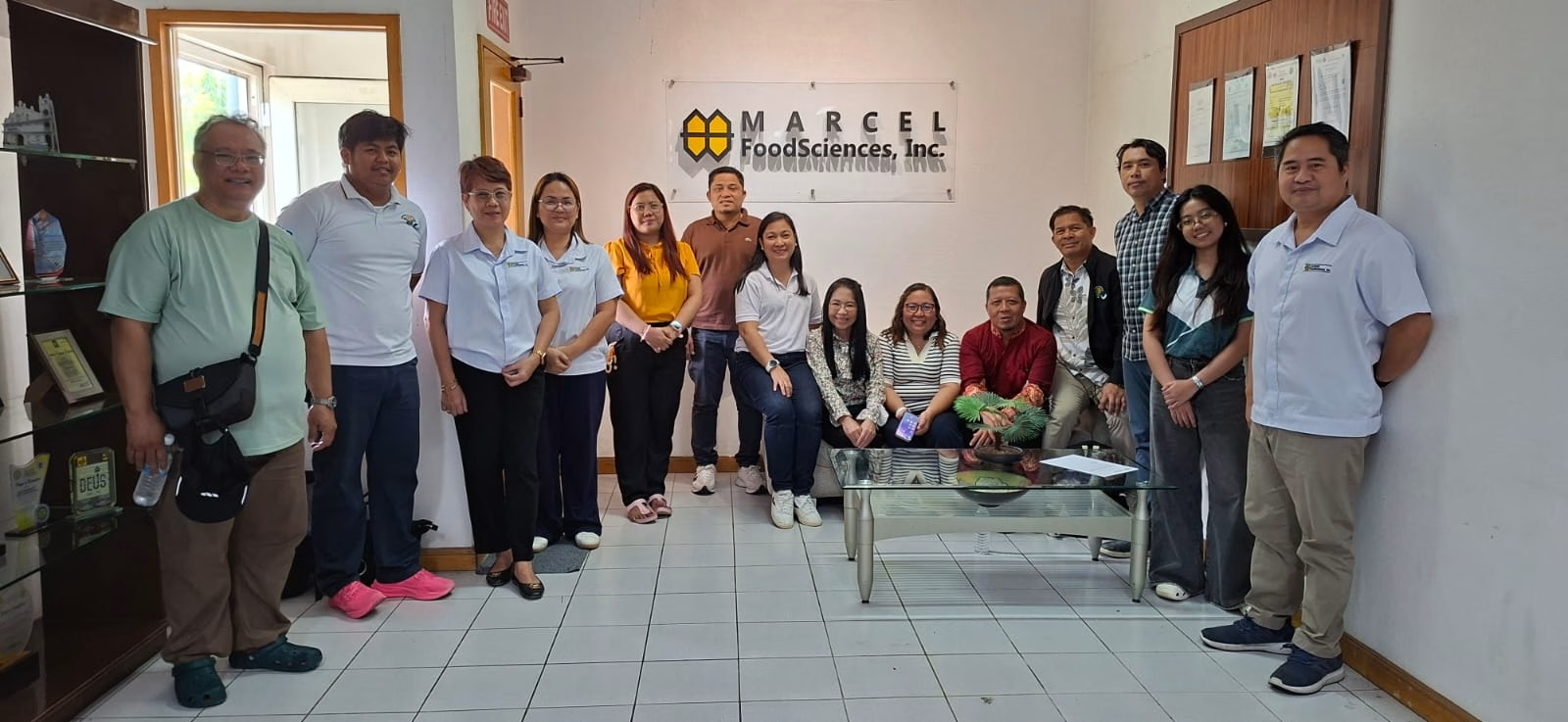
A joint mission visited Marcel Foodscience to examine downstream seaweed processing and the carrageenan value chain. The facility operates under strict quality, organic standards, food safety certifications, and occupational safety protocols.
SEAFDEC and BFAR Team Visit a Seaweed-Processing Company in Cebu
Posted September 9, 2026
A joint mission visited Marcel Foodscience to examine downstream seaweed processing and the carrageenan value chain. The facility operates under strict quality, organic standards, food safety certifications, and occupational safety protocols.
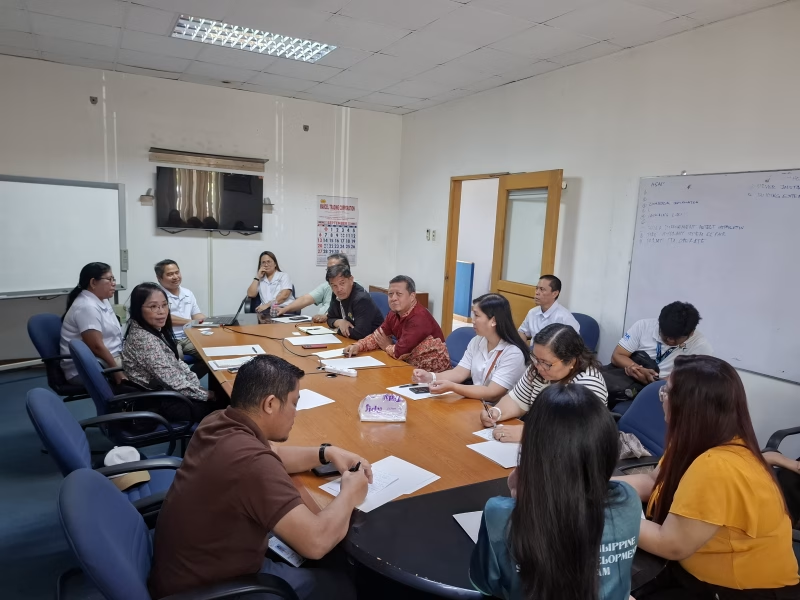
The team comprising BFAR, SEAFDEC’s Blue Horizon Project, and SEAFDEC/AQD visited Marcel Foodscience, a seaweed-processing company producing semi-refined and refined carrageenan. Mr. Philip Parado, Plant Manager, welcomed the mission members, along with personnel responsible for compliance, quality, processing, and operations.
Mr. Parado provided an overview of the plant’s operations, including a reported processing capacity of approximately 8 tonnes per day. The plant suspends operations every December to undertake annual machinery maintenance.
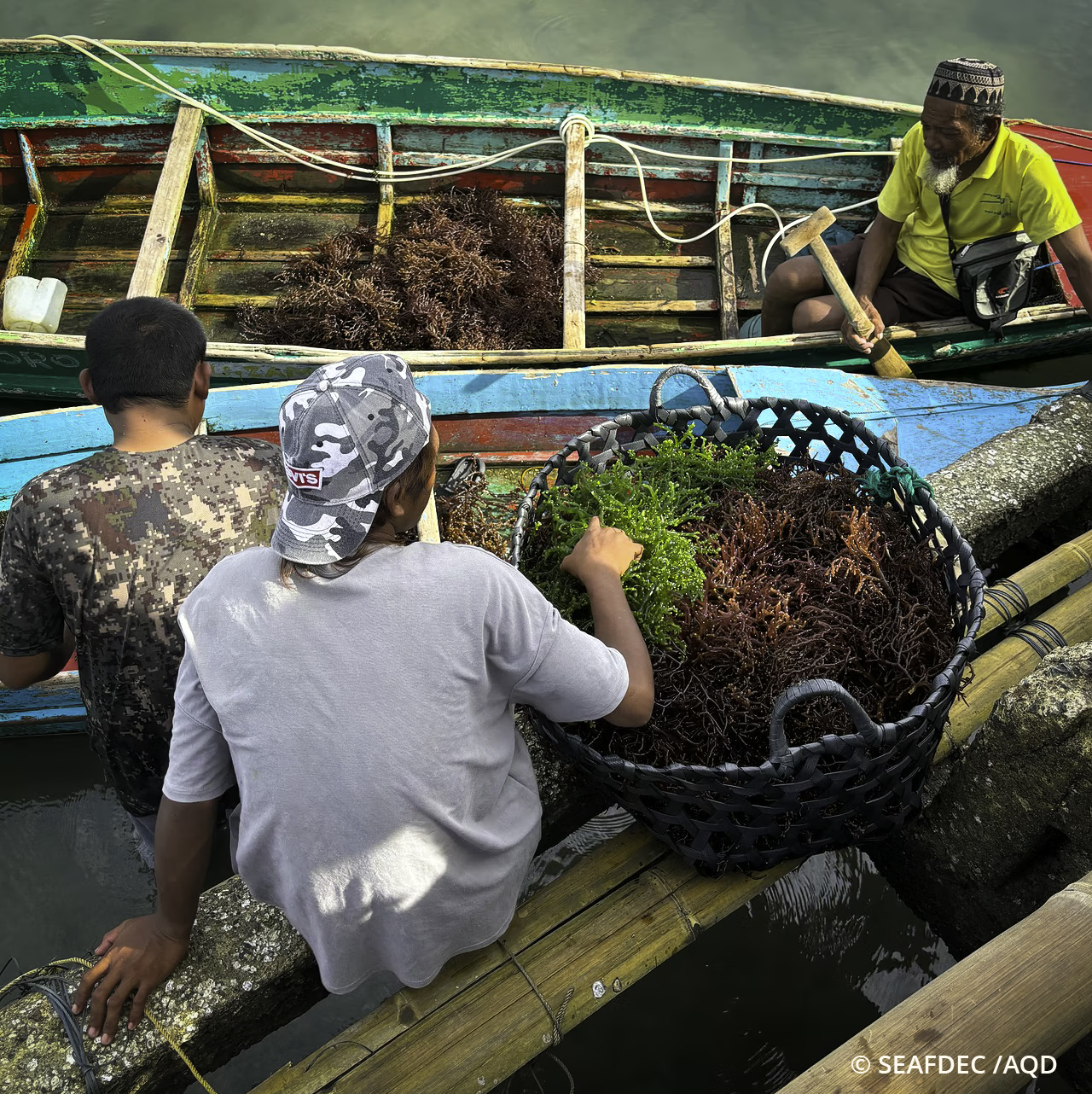
The company’s purchasing team, based at its Manila headquarters, sources dried seaweed primarily from producers in the Philippines, particularly from Mindanao and other producing provinces. Quality requirements for raw dried seaweed take into consideration national standards and good aquaculture practices for seaweed.
The company inspects raw dried seaweed against its quality requirements. Rejection may occur when raw materials do not meet specifications, particularly when moisture content is excessively high. Seaweed and its processed derivatives are classified as organic product. The company also reported that seaweed cultivated using fertilizers to accelerate growth is not accepted. According to the Plant Manager, some seaweed farmers have been observed using fertilizer.
Where processed material has lower viscosity or gel strength, the company may blend and formulate it to meet customer requirements. The company reported that this approach enables finished products to meet buyers’ specifications.
The facility maintains food-safety and quality-management certifications, including FSSC 22000, Halal, and Kosher, while Sedex requirements may apply depending on customer requirements. The facility also undertook food-safety certification activities in May 2026.
Contamination control is incorporated throughout processing. Products are handled in enclosed areas, and regular sanitation is undertaken to minimize microbial contamination. Samples are tested internally and may also be submitted to third-party laboratories to validate results. Testing is likewise undertaken before products are shipped.
Occupational health and safety are given considerable attention within the processing facility. Workers must use appropriate personal protective equipment, including steel-toe shoes, goggles, hair nets, and masks, particularly in higher-risk processing areas such as milling. Although protective equipment adds to operational costs, the company considers it necessary to protect workers and maintain a safe working environment.
The team subsequently toured the facility to observe major stages of the processing chain, including cleaning, drying, grinding, blending, and packaging. The visit provided practical insights into the downstream segment of the seaweed value chain and complemented the discussions with farmers on production, market linkages, raw-material quality, food safety, occupational safety, and opportunities for value addition.
Marcel Foodscience is a member of SIAP – Seaweed Industry Association of the Philippines, who is also member of Project Steering Committee (PSC) of the Blue Horizon Seaweed Aquaculture Project.